

Stacker cranes, shuttle and robotics
Scalable and versatile: shuttles are conquering all industries
The increasing cross-industry use of shuttle systems is growing steadily to rapidly. Similarly, this future-oriented technology is taking on more and more functions in intralogistics. As the manufacturers' statements show, the high demand from users is motivating further and continuous optimization and innovation.
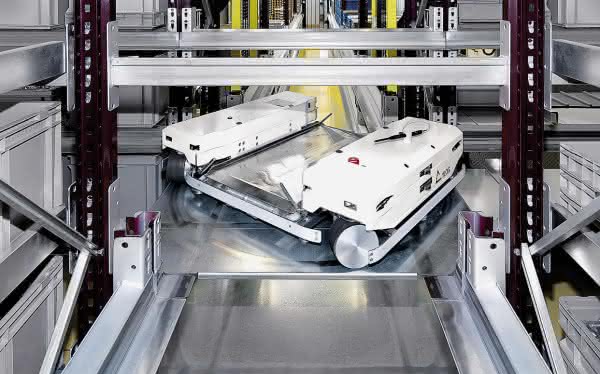
In which sectors, in which intralogistics areas and for which tasks are your shuttle systems currently used most frequently? This was the question posed by Materialfluss to the manufacturers of shuttle systems.
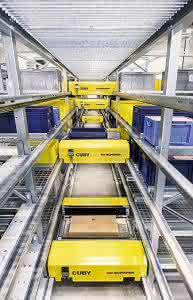
"Dematic Multishuttle 2 is basically suitable for all industries in which packages or containers are handled," says Notker Steigerwald, Head of Business Solutions at Dematic. "The system can significantly increase handling speed, accuracy and throughput in warehouses, factories or distribution centers. The Multishuttle 2 consists of standardized modules, is flexibly configurable and scalable and is particularly suitable for companies that are characterized by strong growth or changes in product requirement profiles. As it also serves peak seasons in the best possible way, the system is often used in e-commerce."
"Due to the ongoing e-commerce boom, we see the following challenges in all sectors: An ever-increasing variety of articles and even smaller batch sizes," states Roman Schnabl, Director Product Management at Knapp AG. "Thanks to access to the entire range of articles without reorganization and relocation, goods-to-person picking with a high-performance shuttle system in the background is the most efficient solution for mastering these challenges in particular."
"Shuttles are also used for automated workstation supply in production logistics. With our smart shuttles, different production steps or workstations can be easily networked with each other and work processes can be optimized in terms of ergonomics and efficiency. The combination of a highly flexible storage system (YLOG Shuttle) and a highly flexible transport system (Open Shuttle) offers an ideal solution for this."
For small quantities and batch size 1
"Shuttle systems enable high performance. We only prefer shuttles to conventional SRM technology for such project requirements," says Volker Welsch, Head of Sales Germany at psb. "In the world of distribution, we see these high performance requirements primarily in the e-commerce sector. Generally speaking: wherever many orders have to be handled in small quantities. In terms of production, we see such requirements in the manufacture of very small quantities down to batch size 1.
On the other hand, it is not possible to delimit industries. In principle, all industries are affected by these developments and the corresponding requirements for intralogistics systems: From industrial bakeries to the automotive world and fashion distribution."
"SSI Schaefer has a very wide range of different shuttle systems, and the range of applications is correspondingly large," emphasizes Dr. Max Winkler, Vice President Solutions & Technology at SSI Schaefer, Graz. "It ranges from beverage logistics and food retail to spare parts or universal applications for third-party logistics service providers. This is accompanied by a diverse range of applications, from compact channel storage to sequence-accurate serving to palletizing robots and classic goods-to-person applications to shipping buffers."
As Eric Große, Head of Product Management Storage Systems at TGW, explains, TGW uses the "Stingray" shuttle system primarily in its core sectors of textiles, food retail, spare parts and general merchandise, but also in the manufacturing and automotive environment. "We support our customers' various business models, from wholesale to retail or e-commerce through to omni-channel commerce. The possible applications for shuttle systems range from picking buffers, including returns handling, to outgoing goods consolidation buffers. They are also increasingly being used as long-term storage systems. Depending on the requirements, the individual functions can be mapped in separate shuttle systems or merged into one. TGW is currently the only supplier on the market to implement Stingray shuttle systems in deep-freeze areas down to minus 30 degrees."
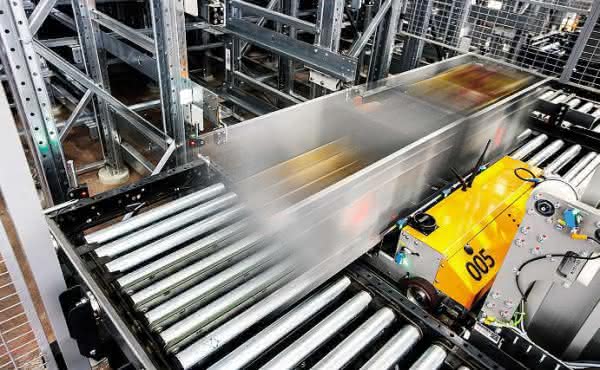
"Our shuttle systems are mainly used in the food retail, fashion, parts & components and e-commerce sectors," explains Peter Bimmermann, Business Development Manager at Vanderlande Industries. "They mainly cover the following areas: Automated small parts warehouses with picking function, dynamic buffers, for example for order consolidation, dynamic loading of picking racks, for example flow channels, storage and replenishment function, returns processing."
"Our viaflex shuttle systems are designed for maximum performance in the smallest of spaces," says Thomas Preller, Sales Manager at viastore Systems. "They are used across all industries: in production supply, as shipping buffers, sorting or picking warehouses, alone or in combination with manual, forklift or SRM-operated storage systems. The vehicles flexibly transport different load units, handle a very high number of storage and retrieval processes in a very short time, and the modular system architecture and seamless connection to conveyor and picking technology open up almost limitless possibilities for our customers."
"With viaflex2 and viaflex3, we have two different systems in our portfolio. viaflex2 consists of level-bound shuttle vehicles that work in parallel and enable high throughputs. The flexible, changeable and expandable structure grows with the user's tasks. Thanks to the low moving mass and the use of energy recovery systems, viaflex2 is also extremely efficient - reducing operating costs and protecting the environment. The viaflex3 system adapts flexibly to the spatial conditions and makes optimum use of every square and cubic meter of the warehouse. The aisle- and level-independent shuttles reliably transport the goods to where they are needed - quickly and easily, without the need for complex conveyor technology. This makes viaflex3 the ideal solution for warehouses with medium throughput and limited space."
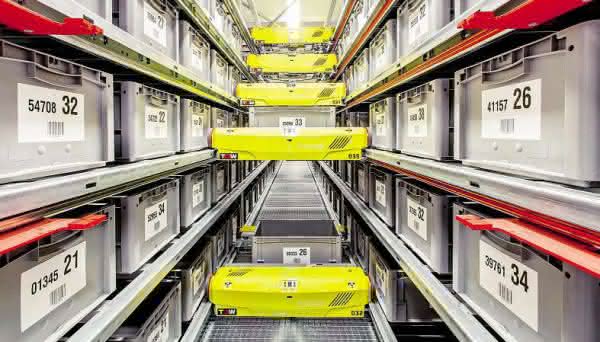
Based on your development and implementation experience, what major trends do you see in shuttle technology, for example in terms of possible applications and range, performance and throughput, technology and control, energy efficiency and cost-effectiveness? The detailed answers to this question also show how intensively and committed the manufacturers are to further developing and optimizing their shuttle systems.
According to Notker Steigerwald, one current topic is the use of shuttles in the chilled and frozen food sector. "With the expansion of e-commerce towards food retail, there will be further significant growth here. In general, the use of shuttles is particularly interesting for the e-commerce market, which is growing at an annual rate of 10 percent. In terms of flexibility, it is important to be able to handle the widest possible range of different load units with just one type of vehicle. For this purpose, our Multishuttle 2 Flex is equipped with a flexible load handling device with an innovative eight-finger design that can handle different carton or container sizes and packaging formats without the use of a tray."
Today, a multi-shuttle has 10 times the performance of a conventional stacker crane
The Dematic manager explains further: "A Multishuttle already achieves up to 10 times the performance of a conventional storage and retrieval machine. Further increases in system availability are certainly possible. Shuttle vehicles, with their better weight-to-payload ratio, are already more energy-efficient than conventional storage and retrieval machines. One of the ways to reduce the costs of shuttle systems compared to stacker cranes is inter-aisle transfer, which enables goods to be exchanged within a shuttle warehouse, even between aisles. This makes the warehouse even faster, as the front zone requires fewer conveyors, which has a positive impact on the ROI.
Storage capacity and throughput increased with shuttle solution
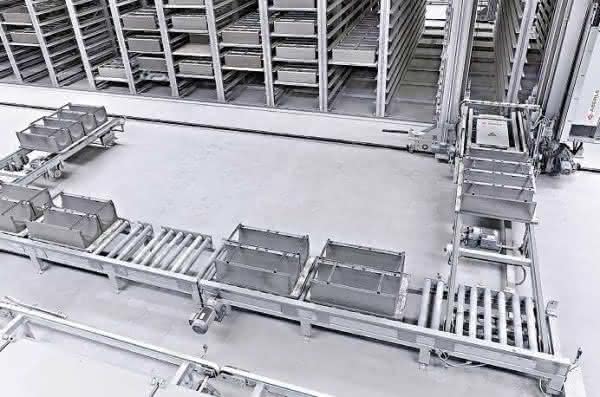
For the production and distribution warehouse of Hauraton, the European market leader in drainage technology, Aberle has implemented a fully automated channel storage system with a shuttle solution for channels as part of a retrofit project. The storage and retrieval machines, each equipped with a shuttle, pick up the plastic trays with the freshly produced drainage channels and move them to the front of the racking system. The 20 channels of the system offer 4,080 storage locations. At the designated channel, the shuttle moves from the stacker crane and transports the tray to the assigned storage location. Two further storage and retrieval machines with shuttles are installed on the retrieval side of the channel storage system. "With the shuttle storage solution from Aberle, we were able to significantly increase our storage capacity in the available space," says plant manager Michael Schenk. "Thanks to the automation and modern system control, we have achieved the desired process efficiency and significantly increased throughput."
"We are seeing a sharp increase in the number of possible uses for shuttle technology, from applications with 10,000 storage locations and low throughput to high-performance buffer applications with thousands of storage and retrieval operations per hour," reports Roman Schnabl.
The trend is clearly moving towards flexibility
One of the major technical innovations is the 3D shuttle, which allows vehicles to leave aisles and levels: Our flexible YLOG shuttle develops in line with the company's growth. The modular system with the innovative shuttle lifts enables even the smallest logistics solutions, which can be easily expanded by extending the racking areas and increasing the number of vehicles.
Knapp is also pursuing a holistic approach to efficiency measures with the OSR Shuttle Eco: The new system allows a higher storage density and therefore a higher number of storage locations with the same energy requirement, which reduces costs while optimizing performance."
Wide range of combination options
"The atomization of order structures requires a lot of performance in the warehouses. Shuttle systems offer a considerable range of possible solutions here," emphasizes Volker Welsch and runs through the possible combinations for us: "One or even two shuttles per level? Shuttles that stagger levels? One or two lifts for transport aids (THM) at the end of the aisle? Several THM lifts, distributed and integrated in the aisle? THM lifts and shuttle lift at the end of the aisle? This list of possibilities can be extended. It is important to work out the right solution for each customer from this multitude of possible combinations on the basis of a detailed data analysis. Technology, control and energy management are then downstream issues. Of course, our shuttles are also constantly being further developed with regard to these aspects."
"Shuttle systems are now just as established in intralogistics as conventional storage and retrieval machines," emphasizes Dr. Max Winkler. "In general, there is no technological development that only affects shuttles. Whether it's new materials, advances in control and communication technology or further developed drives, shuttles benefit from them, but not exclusively, but in harmony with other intralogistics products. In this respect, the general trends regarding further energy optimization, weight reduction, increased throughput and, above all, the use of control and communication technologies for more flexibility and better integration of the devices also apply to shuttles."
"Increasingly high performance is in demand" We are currently seeing two trends, says Eric Große: "In the lower performance range, there are more and more customers whose requirements are only slightly higher than those of a conventional automated small parts warehouse (AS/RS) or who do not want a classic AS/RS. We have therefore recently carried out a number of developments in the area of lifters and shuttles in order to be able to offer an optimum return on investment (ROI) or total cost of ownership (TCO) for this requirement area too."
"In the upper performance and capacity range, e-commerce and the increasingly prevalent omni-channel commerce require new technical solutions, especially new system approaches that require shuttle systems with ever higher performance, increasing capacities and very high availability. This means, for example, multi-lift systems or system heights of 25 meters and more."
"The possible applications for shuttles are becoming increasingly diverse with the number of different concepts," emphasizes Peter Bimmermann. Higher throughputs and the variety of different load handling attachments or new software strategies are enabling more and more applications. Last but not least, scalability makes it easier to get started with shuttle technology. With the "start small and adapt later" approach, the market launch of our 3D shuttle concept "Adapto", which was recently awarded the VDI Logistics Innovation Prize, was very successful. In addition, new functionality can be added to this system at a later date through software updates while retaining the same mechanics."
Shuttle system simply grows with you
"Companies have to provide more and more different goods in ever smaller units within the shortest possible time. The rapid increase in online retail in particular is leading to rising order numbers and falling order quantities in many sectors," says Thomas Preller. "Shuttles have a clear advantage here, as they can store and retrieve significantly more goods in the same amount of time than stacker cranes. Autonomous vehicles are particularly efficient helpers for companies with a complex range of articles.
The modular shuttle systems also score highly when order intake fluctuates. The number of vehicles and lifts can be scaled quickly and easily so that the system is always adapted to current requirements. This also benefits fast-growing companies: if, for example, a new level, rack aisle or an entire storage area is added because the previous capacities are no longer sufficient, the shuttle system simply grows with it."
Reinhard Irrgang
Contact:
Aberle GmbH
Dematic GmbHwww.dematic.com
Knapp AGwww.knapp.com
psb intralogistics GmbHwww.psb-gmbh.de
SSI Schäfer - Fritz Schäfer GmbHwww.ssi-schaefer.com
TGW Logistics Group GmbHwww.tgw-group.com
Vanderlande Industries GmbHwww.vanderlande.com
viastore Systems GmbHwww.viastore.de


You might also be interested in
Winner material flow PRODUCTS OF THE YEAR 2023
Conductix-Wampfler: ChargeLine 0865
Two-pole conductor rail segments for efficient opportunity charging of shuttles, suitable for thousands of cycles per day.
 read more...
Hermann Grewer celebrates his 80th birthday
Hermann Grewer, Honorary Chairman of the North Rhine-Westphalia Transport and Logistics Association (VVWL) and Honorary President of the German Road Haulage, Logistics and Disposal Association (BGL), celebrated his 80th birthday on June 6.
read more...Well chilled for sure
V-Zug Kühltechnik AG, developer and manufacturer of refrigeration appliances and part of the successful V-Zug Group, has set up a new production facility for refrigerators of all heights and dimensions at its Swiss site in Sulgen.
read more...Advantageous automation of small parts warehouses
The RSX1 shuttle system will be at the center of Rocketsolution's presence at this year's Logimat trade fair.
read more...Reduced energy requirements in the high-bay warehouse
One of Germany's leading premium car manufacturers is already focusing on energy efficiency in the production of its new SUV model with electric drive. The storage and retrieval machines in a high-bay warehouse at the production site have been...
read more...Low lift pallet truck for light duty applications
Clark has launched a new low lift pallet truck with the model designation LWio15 for light transport tasks. The truck has a load capacity of 1500 kg and is suitable for short distances in goods distribution, production or warehousing.
read more...Internationalization as an opportunity
E-commerce is in a state of flux. Changes in purchasing behavior and procurement problems are keeping e-commerce retailers busy. Logistics plays a decisive role in the overall online shopping experience.
read more...Fulfillment Center for Frisco.pl
Polish eGrocery specialist and TGW deepen partnership
TGW is building a highly automated fulfillment center for Frisco.pl in the Polish capital Warsaw. This is the second project in a row that the two companies have implemented together.
read more...Which world will it be in 2023?
Michael Schreckenberg teaches at the University of Duisburg-Essen as Professor of Physics of Transport and Traffic. Once a year, he addresses the readers of materialfluss, formerly LT-manager, with a critical and humorous expert article on transport...
read more...