

From materialfluss 6/2020
"IT is not an end in itself"
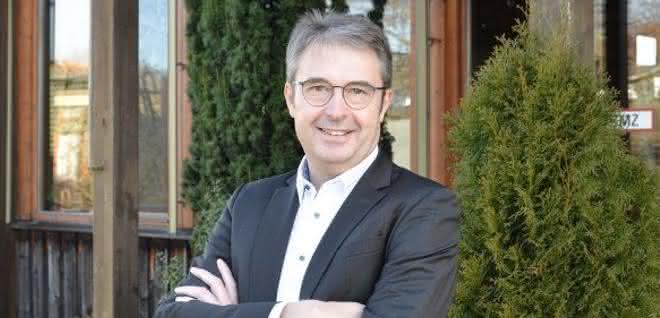
Johannes Meißner has been a new member of Witron's management team since the beginning of 2020. The engineer, who specializes in communications engineering, comes from the company's IT department and started his career at the Upper Palatinate-based company more than 30 years ago. Does the appointment of an IT manager change Witron's strategy?
materialfluss: An IT manager as the new managing director, does your appointment to the management board herald new times at Witron, away from physics and towards IT?
Johannes Meißner: I was jointly responsible for IT, but I studied engineering with a focus on communications technology. So we stay close to physics (laughs). Seriously, in the past we were very close to the hardware and developed control systems ourselves in the early days. Our focus is moving a little away from hardware, but we must not lose contact and understanding. IT is not an end in itself; we must always ask ourselves why and for what purpose we are developing the applications and what the interaction with physics looks like. Many IT hypes dominate the public debate. However, many companies often lose sight of the customer focus.
mfl: So will everything stay the same?
Meißner: Even with the movement in our development priorities explained above, we are in the midst of realigning our IT structures. In concrete terms, this means that we are working on new user interfaces, investing in usability, using web applications, building platforms and using cloud services. It is important that we do this together with our customers. One example: my first project was in the USA and more than 20 years ago we developed a warehouse management system that is still in use today in more than 40 locations, has always been maintained and modernized and may work in a private cloud in the future.
mfl: Back to the hardware - Witron has been using Beckhoff controllers for a few months now, why?
Meißner: We see the future in PC-based control. We get an open development environment, we can use our software developments.
mfl: IT and control worlds are moving closer together - are high-level languages also the future in control technology?
Meißner: The worlds are blurring. The control system sends data to a cloud. IT, office and store floor are mutually dependent, which is why high-level languages will become more important, also in order to dock web applications and increase flexibility, and universities rarely train students in IEC 61131 development. It will not disappear, but high-level languages will become more important in our control world.
mfl: Which languages do you use at Witron?
Meißner: C++, C#, .net and languages for web and mobile applications such as Xamarin/REACT. Database languages such as PL/SQL are also important.
mfl: Do you use open source software?
Meißner: The current strategy is more about opening up Witron applications further to the outside world through additional connectivity. We are currently taking the first steps and are discussing new applications, particularly in our end-to-end platform, in order to provide participants in the supply chain applications with appropriate access and control options. For example, we want to make micro services available to the stores in the future, which will also make our work in the logistics center easier.
mfl: A much-discussed topic in logistics center IT is middleware when I have several providers in the warehouse. Why do Witron and the other providers find it so difficult to develop interfaces?
Meißner: The problem is that some customers tinker with the middleware themselves. If we have middleware that only creates connections between systems, then it usually works well. However, these middleware applications are then often expanded to include additional functions and logics and then it becomes confusing and sometimes even chaotic. Many people then have to maintain three systems - for example, our system, the competitor system and the middleware. We have to set up the processes properly beforehand and create and use interfaces. However, these issues are often not discussed to the end by the user, resulting in uncontrolled growth. But I would also say that if you manage several systems together, even via lean middleware, then the user will still not get the best out of them.
mfl: Your component suppliers such as Beckhoff, Lenze or Sick are supposed to provide open interfaces, but you as an intralogistics specialist are stingy with openness?
Meißner: Yes, that's true. Over the next few years, we will see open systems and the provision of interfaces, also to allow access to applications from the supply chain. The magic word is platform. But you also have to bear in mind that in many cases we now manage the warehouse technically and operate it operationally. The feedback from technical and operational operations flows into our applications in order to further optimize both the system and operations. The trend will continue to grow.
mfl: But the customer wants data.
Meißner: Yes, this is a huge topic. We have to connect the supply chain levels, need more connectivity and exchange http data for control and analysis via MQTT/RESTful.
mfl: Thank you very much for the interview!


You might also be interested in
Cooperation between SAP and Telekom
Common IoT interface simplifies applications
SAP and Telekom are connecting their cloud-based platforms for connected devices and sensors. IoT data can thus be seamlessly integrated into SAP systems and material movements can be tracked in real time.
 read more...
New CIO at Imperial Logistics International
Hugo Pluess is to become the new Chief Information Officer (CIO) at Imperial Logistics International. He will take up his new position, based in Zurich, on August 1.
read more...Timocom increases user numbers and turnover
Timocom remains on course for growth. The pan-European IT company made the biggest leap in 2018 with applications for the digitalization of order management in logistics.
read more...Dieter Schramm new Head of Global IT at Hellmann Worldwide Logistics
Osnabrück, 11.12.2017 - On December 11, Dr. Dieter Schramm took over the position of Head of Global IT at Hellmann Worldwide Logistics SE & Co KG. Dr. Schramm, who holds a doctorate in physics, can look back on more than 20 years of...
read more...Exclusively in Material Flow: Going greener through IT
The Fraunhofer Institute for Material Flow and Logistics (IML) investigated the extent to which intralogistics IT systems contribute to "green intralogistics". The Intralogistics and IT Planning department found that the focus of current measures...
read more...New version of Röhlig Realtime
Röhlig Logistics presents the enhanced version of "Röhlig Realtime". The company is supplementing its digital service portfolio with a central platform that ensures greater transparency and networking throughout supply chain management.
read more...Strategic route planning reorganized
Strategic route planning is one of the key success factors for retail companies. It structures routes and areas, reduces costs, ensures optimal use of resources and increases customer satisfaction.
read more...German Innovation Award for IGZ
Autonomous AI control station for logistics centers wins award
The autonomous AI control center "Smart Logistics Cockpit" from IGZ was awarded the German Innovation Award 2026 in gold. The solution automates central control station activities in logistics centers and is designed to significantly increase...
read more...AI as a partner in inventory management
In a market environment characterized by volatile demand and fragile supply chains, traditional manual inventory management is increasingly reaching its limits. How can companies master the balancing act between maximum delivery capability and...
read more...