

Industry meeting
18th Hamburg Logistics Days: Davos spirit on the Elbe
The 18th Hamburg Logistics Days took place on February 12 and 13. Organizers Jörg Hermsmeier and Dirk Lange (LMS/HLT) once again provided a platform for information and exchange at the Cruise Center Altona.
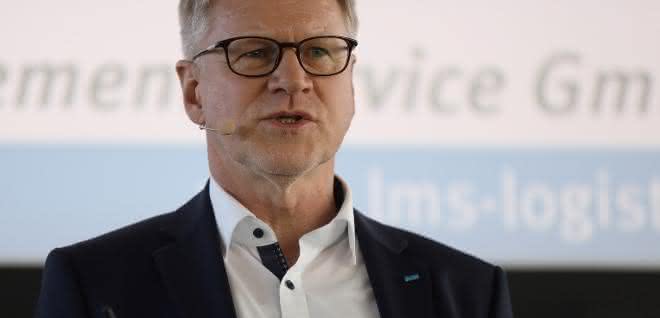
The view of the Elbe from the location visualized the philosophical insight that everything is in flux. Especially in logistics, and not just the material, but also the mindset. Well over 300 decision-makers and managers from the logistics industry spent two days getting to know each other, meeting up again, exchanging experiences, finding inspiration and initiating business deals in order to work out what is important and, despite all the changes, what will also be important in the future, and to find fellow campaigners for meaningful approaches.
The conscience of logistics and responsibility for people and the environment were at the forefront. Topics such as green logistics and CO2 reduction were present, as was the well-being of people. In addition, the Hamburg Logistics Days position themselves with the USP of not losing sight of people in an industry dominated by technology: As in previous years, the event supported the Sternenbrücke children's hospice in Hamburg through donations from guests and companies.
Current topics and impulses were discussed with the plenum through a variety of presentations:
"How Smart Containers Boost Supply Chain Efficiency", Besim Rexhepi from MSC Germany explained how intelligent container technology can generate attractive data that is smart for the supply chain of industries such as automotive, recycling, tobacco and high-tech because it can save time and costs in terms of logistical efficiency. His advice: Being productive instead of busy!
Kevin Bär from E.ON Energie Deutschland spoke about opportunities and trends for an energy transition in logistics. Even though CO2 emissions have risen massively in the last 40 years, a CO2 reduction of 80% is definitely possible with the use of existing technology. Whether by changing drive systems, as already practiced in inland shipping with hydrogen, for example, or through greenhouses close to the customer - his demand: Do everything for a CO2-free world!
Edwin Mantel from EDEKA Südwest and Dr. Markus Ehrmann, Head of Germany at Vanderlande, described the expansion of fresh logistics for EDEKA Südwest's meat plant in Rheinstetten. Germany's largest food retailer wanted to increase capacity and further improve efficiency at this site, which has a turnover of around 700 million euros. Thanks to Vanderlande, this was achieved with innovative technology and, above all, good process management: The project was realized during ongoing operations and capacity was doubled. The Vanderlande philosophy: In a world of technology, a belief in people!
Prof. Dr.-Ing. Tjark Siefkes from the German Aerospace Center spoke about "Next Generation Train Cargo - Highly Efficient Intermodal Logistics". Whether short or long distances, what will the solutions of the future look like, from urban mobility to the new Silk Road? In terms of passenger or freight transportation, safety and reliability will also be the trump cards of the future. His claim: autonomy alone is useless - intelligence must coordinate the entirety.
Björn Anderseck from Mars explained how ecosystems are changing the supply chain. By embedding itself in an ecosystem that connects user data, the pet food sector has become the petcare business area at Mars. New customer requirements relating to the core business that have been recognized in this way are giving rise to new individual offers, which in turn places new demands on the supply chain. Mars is leading the way: Think big and colorful!
Dirk Lange, host and co-owner of LMS Logistik Management Service, explained which strategies are suitable for optimizing conventional order picking. Whether it makes sense to automate is determined by profitability. There are therefore many reasons to opt for conventional order picking. The optimal solution depends on the drivers of distance and time. The most sensible scenario can be determined by simulating different strategies. We see: These consultants turn tasks into solutions with ease.
Stefan Schmaus from Rapunzel spoke about the global organic food logistics of the natural food manufacturer from the Allgäu region and the current expansion project of the Bad Grönenbach logistics center with Swisslog. Founded 45 years ago, the company is growing continuously and needs to expand its capacities and services. The company founder realized that the only constant is change.
Dr. Wolfram Hauff from Villeroy & Boch also discussed the planning and management of logistics networks as part of the company's expansion. A 30% growth of the globally operating traditional company must be managed logistically. Network optimization must not only take into account the current situation, but also future developments with service and market requirements. Thanks to powerful tools and SIEMENS: Welcome to the future!
Prof. Dr. Sebastian Kummer from the Vienna University of Economics and Business gave intellectual input on digital innovation and disruption in logistics. Consequences for social developments, entrepreneurial action, leadership and individual development were highlighted in this context. Ongoing change is a constant companion of logistics, and its future is an innovation journey. Disruption occurs above all when those involved become lazy, self-righteous and blind to the future. His demand: We need a 360° view of the digital infrastructure for investments, security concepts, innovation promotion and acceptance. Whether thinking vertically or laterally - the main thing is to be creative.
Stefan Schwarz from Tollkühn Shoppartner and Johannes Traub from AM-Automation explained in their presentation why service station tenants don't know any slow sellers. The full-service supplier for filling stations is the market leader in the highway sector in Germany with 93% market share. Together with AM-Automation, a new storage solution was implemented. One of the aims of the logistics concept was to automate all processes as much as possible. This was achieved with AutoStore. In addition, the more efficient warehouse logistics also increased customer satisfaction. And we know that: That's what it's all about.
Dr. Georg Weinhofer from Interdiscount & microspot.ch presented the logistics of the leading Swiss omni-channel retailer for home & consumer electronics. The two companies are two formats of one business division and have three sales channels. In Switzerland, the leading provider of home electronics and the non-food online shopping center practice omnichannel logistics due to the different channels in procurement, sales and delivery. Online and/or offline - the customer buys and is supplied wherever they want. Because the goal is customer satisfaction.
Goodbye particulate matter! City logistics with LNG trucks spoke to Torsten Oldhues from HAVI Logistics. The globally active company has one of the largest LNG fleets in Germany and has been going green for 35 years. LNG is used to further reduce particulate matter and noise pollution in city centers. A dedicated filling station has been set up for this purpose, which has developed into an interesting additional business due to the shortage situation. In the long term, even bio-LNG is the prospect: green all the way.
Dr. Volker Lange and Benedikt Mättig from the Fraunhofer Institute for Material Flow and Logistics spoke about digital assistants in the world of logistics and posed the question of their potential for the future. Even if 60% of employees in logistics are "digital foreigners", the interaction of man, machine and system with new digital solutions and components is unavoidable in the age of Industry 4.0. The use of such assistants to improve quality is particularly useful in the packaging process and in load carrier management. Your conclusion: the potential depends on what you do.
Production 2040 - What will Industry 4.0 look like after the hype? Prof. Dr. Andreas Syska from the Niederrhein University of Applied Sciences gave this outlook. The image of the role of people in the future ranges from dreams of prosperity to horror scenarios. What is lacking is a clear vision and an active shaping of the human side of digitalization and Industry 4.0. What is therefore required is critical thinking in philosophy and ethics as well as imagination. The future is the result of actions, actions are the result of plans, and plans are the result of visions. His challenge: Be courageous.


You might also be interested in
Winner material flow PRODUCTS OF THE YEAR 2023
Conductix-Wampfler: ChargeLine 0865
Two-pole conductor rail segments for efficient opportunity charging of shuttles, suitable for thousands of cycles per day.
 read more...
Hermann Grewer celebrates his 80th birthday
Hermann Grewer, Honorary Chairman of the North Rhine-Westphalia Transport and Logistics Association (VVWL) and Honorary President of the German Road Haulage, Logistics and Disposal Association (BGL), celebrated his 80th birthday on June 6.
read more...Well chilled for sure
V-Zug Kühltechnik AG, developer and manufacturer of refrigeration appliances and part of the successful V-Zug Group, has set up a new production facility for refrigerators of all heights and dimensions at its Swiss site in Sulgen.
read more...Advantageous automation of small parts warehouses
The RSX1 shuttle system will be at the center of Rocketsolution's presence at this year's Logimat trade fair.
read more...Reduced energy requirements in the high-bay warehouse
One of Germany's leading premium car manufacturers is already focusing on energy efficiency in the production of its new SUV model with electric drive. The storage and retrieval machines in a high-bay warehouse at the production site have been...
read more...Low lift pallet truck for light duty applications
Clark has launched a new low lift pallet truck with the model designation LWio15 for light transport tasks. The truck has a load capacity of 1500 kg and is suitable for short distances in goods distribution, production or warehousing.
read more...Internationalization as an opportunity
E-commerce is in a state of flux. Changes in purchasing behavior and procurement problems are keeping e-commerce retailers busy. Logistics plays a decisive role in the overall online shopping experience.
read more...Fulfillment Center for Frisco.pl
Polish eGrocery specialist and TGW deepen partnership
TGW is building a highly automated fulfillment center for Frisco.pl in the Polish capital Warsaw. This is the second project in a row that the two companies have implemented together.
read more...Which world will it be in 2023?
Michael Schreckenberg teaches at the University of Duisburg-Essen as Professor of Physics of Transport and Traffic. Once a year, he addresses the readers of materialfluss, formerly LT-manager, with a critical and humorous expert article on transport...
read more...