

Digitization
Open Logistics Foundation established
Dachser, DB Schenker, duisport and Rhenus founded the Open Logistics Foundation in Berlin on October 22. The purpose of the foundation is to establish a European open source community with the aim of driving forward digitalization in logistics and supply chain management on the basis of open source and standardizing logistics processes through de facto standards.
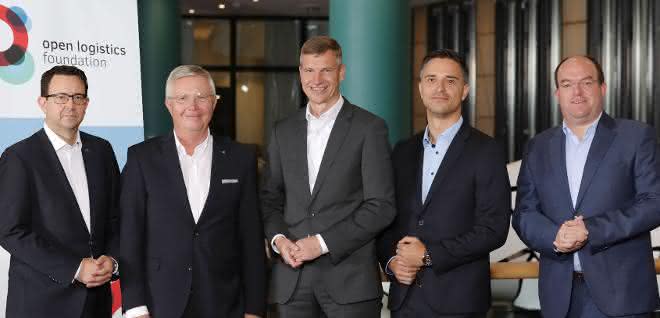
The founders of the foundation want to play a pioneering role in the future topic of open source. "The digitalization of logistics can only be advanced together. This is why open source is an important success factor for the entire logistics industry and at the same time a driver for standardized processes in digital value chains. We see the establishment of the Open Logistics Foundation as the first step towards a platform economy based on European legal standards and values. It is both a start and an appeal to logistics to think technology and processes together and to actively participate in the open source community," said the founders in a joint statement. Now it is a matter of anchoring open source in logistics and creating the internal structures for working with the corresponding hardware and software.
The foundation is aimed at all logistics-related companies and their IT developers. It is open to new members from all areas of logistics via its Open Logistics e.V. support association, which was also founded in Berlin. Numerous companies have already announced their participation in the association, including AEB, BLG Logistics Group, GS1 Germany, Lobster Logistics Cloud and Bochum-based Setlog Holding, as well as associations such as the Fraunhofer Society for the Promotion of Applied Research.
The core of the foundation's work is the operation of the Open Logistics Repository, a technical platform on which software and hardware, interfaces, reference implementations and components are available open source under a permissive license. In order to promote broad acceptance within logistics, all tools and components will be free of charge and can be used without restriction for commercial applications. Companies can use them to expand their own platforms, for example, or to set up new products and business models more quickly.
The foundation's main tasks also include selecting collaborative projects whose developments are to be included in the repository. It monitors the quality of the open source software and guarantees neutrality in its development. It also offers training courses for companies on how to use the platform.


You might also be interested in
New version of Röhlig Realtime
Röhlig Logistics presents the enhanced version of "Röhlig Realtime". The company is supplementing its digital service portfolio with a central platform that ensures greater transparency and networking throughout supply chain management.
 read more...
Inventory effort reduced to a minimum via cloud solution
Lacroix Electronics, electronics supplier and part of the globally active Lacroix Group, has successfully optimized its inventory process with the help of Remira.
read more...Körber Business Area Supply Chain: Edward Auriemma becomes CEO of the Software Division
Edward Auriemma will be the new CEO for the software business of the Körber Business Area Supply Chain, a joint venture with KKR, from July 8, 2024.
read more...project44 revises Movement platform
project44, a platform for supply chain visibility, is updating its Movement platform with two new features: Firstly, there is an update for transparency and real-time tracking in crisis situations. The other new feature is Detention & Demurrage...
read more...Extended Osca software generation
Setlog will be presenting its enhanced supply chain management software Osca DC (Digital Core) at LogiMAT 2024. The cloud-based tool provides companies with transparency for their supply chain and improves management, collaboration and communication.
read more...ConnectChains: Improving logistics for disaster relief
The Logistics Hall of Fame brought together top-class international experts for the first time at the ConnectChains conference at the Federal Ministry of Transport in Berlin for networking and knowledge transfer. The players in humanitarian...
read more...Supply Chain Management Software
Setlog is now part of Rhenus
The software manufacturer Setlog has been part of the Rhenus Group since October 24, 2023. Setlog was founded in 2001 by Guido Brackelsberg, Ralf Düster and Jakob Gielen and has since developed into a specialist for end-to-end supply chain...
read more...German Logistics Association (BVL) presents study on cyber security
The cross-company protection of supply chains against cyber attacks has so far only been a marginal issue for most companies.
read more...Increased throughput thanks to greenfield-brownfield project
For 25 years, Witron has been the partner of choice for the Austrian food group Spar for the construction and expansion of its central warehouse in Wels. In the fourth construction phase, capacity, efficiency and performance increased dramatically....
read more...