

"Neat"
Jungheinrich in the third quarter of 2022: Robust result
Jungheinrich can look back on a decent third quarter in the 2022 financial year. The intralogistics group recorded a slight increase in earnings in the first nine months of the year, achieving EBIT of EUR 265.9 million and an EBIT margin of 7.8 per cent.
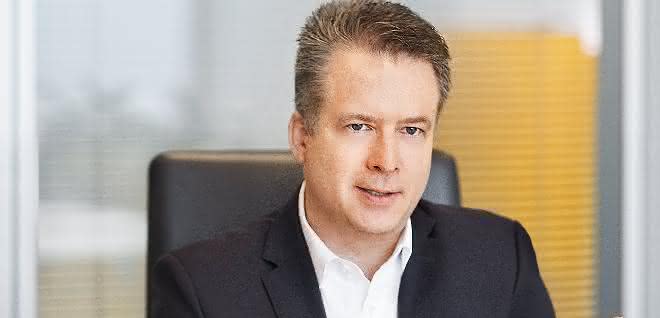
At EUR 3,594 million, the value of incoming orders was on a par with the previous year. At EUR 3,397 million, sales were 12.5% higher than in the same period of the previous year. New truck business was the main driver of the higher consolidated net sales, partly due to very good growth in automated systems. "Jungheinrich has come through the first three quarters of the current financial year well and can report a robust result," says Dr. Lars Brzoska, CEO of Jungheinrich AG. "In view of the difficult conditions, the figures presented are proof of the high resilience of our company," says Brzoska. Thanks to consistent supply chain management, Jungheinrich was largely successful in avoiding production interruptions in the past three quarters. At the same time, the considerable increases in material prices were partially offset by appropriate measures. As at September 30, 2022, the order backlog for new business increased by 23 per cent compared to the end of 2021 to €1,756 million due to the continued limited availability of production materials for further processing.
Forecast 2022
Against the backdrop of the robust business performance in recent months, Jungheinrich had already specified its forecast for 2022 on September 23 of this year. The company now expects incoming orders of between EUR 4.6 billion and EUR 4.9 billion for the current financial year. Group sales are likely to be within the range of EUR 4.6 billion to EUR 4.8 billion. According to current estimates, EBIT will be between EUR 340 million and EUR 380 million. The EBIT margin is expected to range between 7.2% and 8.0%.
Update Strategy 2025+
Jungheinrich has been consistently implementing its Strategy 2025+ since fall 2020, pursuing the goal of creating sustainable value for all stakeholders. As part of today's publication of its quarterly figures, Jungheinrich is also providing an update on the current status of strategy implementation: All current and targeted initiatives and measures of Strategy 2025+ will be continued as planned and in a focused manner, taking into account the tightened framework conditions with the start of the war in Ukraine. The key target figure for Group sales remains unchanged at EUR 5.5 billion by 2025. The target EBIT margin should lie within a corridor of 8 per cent to 10 per cent. Jungheinrich is aiming for a 20 per cent share of sales outside Europe, which is to be achieved in particular through inorganic growth. ROCE (EBIT return on capital employed for intralogistics) should be between 21 per cent and 25 per cent. Jungheinrich has set itself a minimum target of over EUR 100 million by 2025 for the key performance indicator free cash flow. This minimum target will be reviewed in the course of 2023. Productivity measured by EBIT per employee is to increase to a value of around 23,000 euros. In 2025, 70 per cent of the trucks delivered by Jungheinrich are to be equipped with lithium-ion batteries. The proportion of female managers is to increase to 20 per cent by 2025.
Sustainability is a key area of action in the 2025+ strategy. Jungheinrich has defined important sustainability targets in this area in the current financial year: By 2030, all Jungheinrich sites are to be climate-neutral (Scope 1 and Scope 2). In addition, the Group's German plants will no longer produce any landfill waste from 2025. Furthermore, Jungheinrich wants to significantly increase occupational safety within the Group once again by 2025.
At EUR 3,594 million, the value of incoming orders in the reporting period, which includes all business areas - new business, rental and used equipment as well as customer service - was on a par with the previous year (EUR 3,581 million). The order backlog for new business rose to EUR 1,756 million as at September 30, 2022 and was therefore EUR 328 million or 23% higher than the previous year's figure (EUR 1,428 million). Compared to the order backlog value of EUR 1,519 million at the end of 2021, there was an increase of EUR 237 million or 16%. The reason for the continued very high order backlog was the still limited availability of production material for further processing.
The order intake for the months of January to September 2022 and the order backlog as at September 30, 2022 were adjusted for orders from Russia. In light of the war against Ukraine launched by Russia at the end of February 2022, the Executive Board has decided, with effect from March 2, 2022, to stop supplying vehicles and spare parts to Russia and Belarus until further notice.
Turnover
The main driver of the higher Group sales was new business in particular, partly due to very good growth in the automation systems business. The challenges in the supply chains - particularly as a result of the Russia-Ukraine war and the ongoing coronavirus pandemic - remained very high. Due to global networking, the effects of the supply chain bottlenecks extended to the entire supplier and material portfolio as well as the associated logistics capacities. So far, production interruptions have largely been successfully avoided through targeted supply chain management.
Earnings and financial position
The Jungheinrich Group's earnings before interest and taxes (EBIT) amounted to €265.9 million in the period from January to September 2022, a slight increase of 3 per cent compared to the prior-year period (€258.4 million). In the reporting period, the significant increases in material prices were partially offset by suitable measures. The EBIT return on sales (EBIT-ROS) amounted to 7.8% (previous year: 8.6%) against the backdrop of significantly higher Group sales compared to the previous year.
Earnings before taxes (EBT), which were also influenced by high valuation losses on the securities and derivatives held in the special fund, fell to EUR 234.6 million after nine months of 2022 (previous year: EUR 249.6 million). The EBT return on sales (EBT-ROS) amounted to 6.9% (previous year: 8.3%). Earnings after taxes amounted to EUR 174.8 million in the period from January to September 2022 (previous year: EUR 183.5 million). Earnings per preference share amounted to EUR 1.72 (previous year: EUR 1.80).
Net debt of € 95 million was reported as at September 30, 2022, compared to a net credit of € 222 million at the end of 2021. This significant reduction of EUR 317 million compared to the end of 2021 was primarily due to the negative free cash flow from January to September 2022. Free cash flow fell significantly to EUR -273 million (previous year: EUR +137 million). This was primarily due to the sharp rise in working capital.
Forecast
The Executive Board specified its forecast for 2022 from March 24, 2022 in an ad hoc announcement on September 23, 2022. We now expect incoming orders of between EUR 4.6 billion and EUR 4.9 billion for 2022 (previously: slightly below the previous year, 2021: EUR 4.9 billion). Group sales should be within a range of EUR 4.6 billion to EUR 4.8 billion (previously: slightly above the previous year, 2021: EUR 4.2 billion). According to current estimates, EBIT will be between EUR 340 million and EUR 380 million (previously: significantly below the previous year, 2021: EUR 360 million). Accordingly, an EBIT margin within a range of 7.2% to 8.0% is expected (previously: significantly lower than the previous year, 2021: 8.5%). EBT should reach between EUR 305 million and EUR 345 million (previously: significantly lower than the previous year, 2021: EUR 349 million). The EBT margin should be between 6.5% and 7.3% (previously: significantly lower than the previous year, 2021: 8.2%). We expect ROCE of between 14.0% and 17.0% (previously: significantly lower than the previous year, 2021: 20.2%). The key performance indicator free cash flow, which was introduced with effect from June 30, 2022, will reach a clearly negative value (2021: EUR +89 million).
This forecast is based on the assumption that there will be no significant interruptions to production until the end of the year and that supply chains will remain largely intact. It still cannot be ruled out that a shortage of gas could lead to serious restrictions in production.


You might also be interested in
Winner material flow PRODUCTS OF THE YEAR 2023
Conductix-Wampfler: ChargeLine 0865
Two-pole conductor rail segments for efficient opportunity charging of shuttles, suitable for thousands of cycles per day.
 read more...
Hermann Grewer celebrates his 80th birthday
Hermann Grewer, Honorary Chairman of the North Rhine-Westphalia Transport and Logistics Association (VVWL) and Honorary President of the German Road Haulage, Logistics and Disposal Association (BGL), celebrated his 80th birthday on June 6.
read more...Well chilled for sure
V-Zug Kühltechnik AG, developer and manufacturer of refrigeration appliances and part of the successful V-Zug Group, has set up a new production facility for refrigerators of all heights and dimensions at its Swiss site in Sulgen.
read more...Advantageous automation of small parts warehouses
The RSX1 shuttle system will be at the center of Rocketsolution's presence at this year's Logimat trade fair.
read more...Reduced energy requirements in the high-bay warehouse
One of Germany's leading premium car manufacturers is already focusing on energy efficiency in the production of its new SUV model with electric drive. The storage and retrieval machines in a high-bay warehouse at the production site have been...
read more...Low lift pallet truck for light duty applications
Clark has launched a new low lift pallet truck with the model designation LWio15 for light transport tasks. The truck has a load capacity of 1500 kg and is suitable for short distances in goods distribution, production or warehousing.
read more...Internationalization as an opportunity
E-commerce is in a state of flux. Changes in purchasing behavior and procurement problems are keeping e-commerce retailers busy. Logistics plays a decisive role in the overall online shopping experience.
read more...Fulfillment Center for Frisco.pl
Polish eGrocery specialist and TGW deepen partnership
TGW is building a highly automated fulfillment center for Frisco.pl in the Polish capital Warsaw. This is the second project in a row that the two companies have implemented together.
read more...Which world will it be in 2023?
Michael Schreckenberg teaches at the University of Duisburg-Essen as Professor of Physics of Transport and Traffic. Once a year, he addresses the readers of materialfluss, formerly LT-manager, with a critical and humorous expert article on transport...
read more...