

Conveyor technology & components
Rulmeca: It all depends on the hygienic conditions
Hygienic conditions are particularly important when fruit, vegetables, dairy products or pharmaceutical products are processed - especially when it comes to conveyor technology. Special cleaning processes such as the clean-in-place process take place while the conveyor belt is running. Components such as drum motors must have a special density. Rulmeca proposes to introduce a new protection class for double protection: IP66/99 plus.
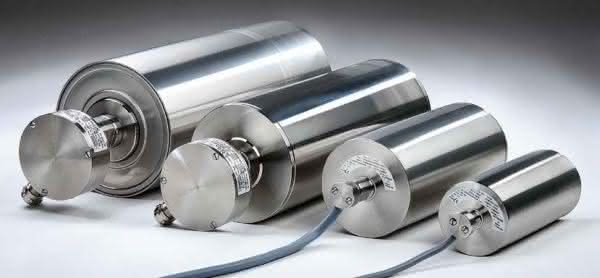
Many process and conveying machines and systems in the food, beverage and pharmaceutical industries need to be cleaned after each production cycle in order to make them ready for the next production cycle, clean and free from potential pathogens and cross-contamination. Clean-in-place processes are increasingly being used for this purpose. They are characterized by the fact that they are carried out on site and without dismantling the components. The aim of these cleaning methods is to establish a process through the exact definition of cleaning agents, pressures, temperatures and times, in which the desired cleaning performance can be reproduced at any time and can therefore be sustainably ensured and documented.
Using steam jets against sensitive components
In conveyor technology, clean-in-place processes are often implemented while the conveyor belt is running. And there are good reasons for this: On the one hand, it is quite time-consuming to remove and reinstall a heavy conveyor belt that extends over several meters. On the other hand, it is also the case that the links of plastic modular belts, for example, can be cleaned more easily during operation, as this is the best way to reach the gaps piece by piece where the links open the widest. But cleaning crews often take an uncompromising approach with high-pressure cleaners and steam jets. They have a clear mission: to get everything spotlessly clean as quickly as possible. No consideration is given to sensitive components.
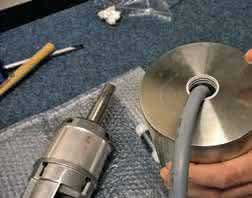
Conveyor components such as drum motors must therefore not only be resistant to aggressive cleaning agents and disinfectants, but must also be one hundred percent leak-proof even when cleaned several times a day with splash water and high-pressure and steam jet cleaning.
Double protection
Whether a component offers the required tightness is usually specified in IP degrees of protection. It is important that motors are equipped with double IP protection, as it makes a difference whether a system is specified for protection to IP66, IP69 or both types of protection with IP66/IP69. The higher-quality IP69 protection does not automatically include IP66 protection. With IP66 protection, a strong jet of water from a distance of 3 meters at 100 liters per minute at a pressure of 1 bar against the housing from any direction for at least 3 minutes has no harmful effects. IP69 offers protection against high-pressure or steam jet cleaning. This means that systems are protected against water jets from close proximity at high temperatures.
The stainless steel drum motors from Rulmeca have exactly this double IP66/IP69 protection level, therefore IP66/IP69-plus. This means that they are verifiably protected against pre-cleaning and subsequent rinsing with cleaning agents and disinfectants as well as microbiological cleaning with steam jet and high-pressure cleaners.
Also tested during operation
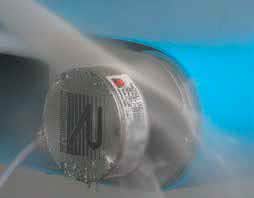
This double protection is obviously sufficient. However, it does not quite apply to drum motors, because you need to know that the IP tests are carried out when the motor is at a standstill. But what about conveyor systems that are cleaned using the clean-in-place method while the motor is running? For such applications, drum motors would also have to have IP66/69-plus protection during operation. But how does this requirement differ? When the motor is mounted and rotating, the belt forces load the axle bearing on one side. This can result in microscopically small gaps that are not present when the motor is stationary.
These gaps can lead to the ingress of cleaning agents and water, which can reduce the service life of the motors and increase maintenance costs. Rulmeca was therefore the first company in the industry to test its drum motors during operation. And even during operation, it has been proven that the motors offer reliable protection under both IP66 and IP69 conditions.
One hundred percent tight
The critical point is the seal between the static axle journal and the rotating drum. Rulmeca has developed an extremely tight solution at this point. Competitive solutions often use a hardened bushing that is glued to the axle journal and works with a steel disk seal. Rulmeca uses a comparatively simpler friction seal made of high-quality PTFE. In the sealing area, the axle journal has been surface-tempered by roller burnishing. This makes the sealing surface harder and smoother. The PTFE microparticles on this surface ensure friction-free and long-term tight running without abrasion. The PTFE seal has a double lip seal developed in-house by Rulmeca without a micro-screw effect to ensure 100% tightness even during operation and with the additional belt tensile forces that occur here. This is because normal turned seals create very fine thread grooves through which liquids can migrate during rotation, like a pickup over a record. This effect does not occur with Rulmeca drum motors, making them safe against the entry and exit of liquids.
About Rulmeca
Rulmeca Germany GmbH is part of the Rulmeca Group based in Alme/Italy. With over 200 employees, Rulmeca Germany GmbH produces idlers, drum motors and belt drums for use in unit load and bulk material handling technology at two ISO-certified sites in Aschersleben and Leipzig. The company works together with system manufacturers, development offices and end users worldwide. In addition to the production of conveyor technology components, Rulmeca also offers its customers the calculation of conveyor belt elements for complex systems as a service.
Conclusion
The industry has long been aware of the problem that water can enter the drum motor despite IP66 or IP69 protection. Rulmeca has found a solution and now certifies to both protection classes and also extends this protection class to ongoing operation.
Andreas Flies


You might also be interested in
e2open bonded warehouse solution for several European countries
e2open, a provider of networked supply chain platforms, has expanded its customs warehouse management in Europe. Companies that import goods to Europe now have the option of using various customs warehouse programs.
 read more...
New start-up aims to facilitate access to robotics
Pssbl.Robotics, a start-up founded jointly by Schubert and Weiss, aims to simplify the introduction of robotics in mechanical and plant engineering.
read more...Test shipment with RoRo Car Carrier via Bremerhaven
Last August, the RoRo Car Carrier MV Cosco Shengshi moored in the northern port of Bremerhaven and started its first test shipment in order to expand the service to Europe.
read more...Rhenus grows at sea and on the road
At the northern tip of Lower Saxony, the logistics service provider is preparing for the growing import of cars via Cuxhaven; in Nuremberg, Rhenus is building a new logistics center next to the existing high-bay warehouse; in Dietzenbach, Hesse, the...
read more...Hermann Grewer celebrates his 80th birthday
Hermann Grewer, Honorary Chairman of the North Rhine-Westphalia Transport and Logistics Association (VVWL) and Honorary President of the German Road Haulage, Logistics and Disposal Association (BGL), celebrated his 80th birthday on June 6.
read more...Group7 expands corporate headquarters
The logistics service provider is planning 60,000 square meters of service and logistics center and an administration building with 5,000 square meters of floor space near Munich Airport.
read more...Cross-channel logistics: overcoming hurdles after Brexit
Hardly any other event has presented European road freight transport with such enormous challenges as Brexit. But there are solutions.
read more...Transport Logistic 2023
After a four-year break with a virtual interlude in 2021, Transport Logistic will return to the Munich exhibition grounds from May 9 to 12, 2023.
read more...Focus on internationalization
L.I.T. will be represented twice at Transport Logistic. The Brake-based logistics service provider's service portfolio ranges from warehousing and transportation using various modes of transport to contract logistics and comprehensive value-added...
read more...