

Conveyor and lifting technology
Testing for more safety
Following the amendments to numerous regulations in recent years, not every company or operations manager is aware that all load handling attachments and lifting equipment must be subjected to regular safety inspections as prescribed by law. Many companies are operating in a safety vacuum.

In fact, there are now several regulations and ordinances that require hoists, slings and load handling attachments to be inspected at least once a year. "This is stipulated, for example, by the DGUV or the Ordinance on Industrial Safety and Health (BetrSichV)," says Kai Schmalenberg, Managing Director of Heidkamp Hebezeuge from Heiligenhaus in North Rhine-Westphalia. The legislator relies on variable inspection intervals in which certain test specimens should be inspected more frequently than once a year, depending on their technical design, mechanical load and service life. The legal consequences that can result from ignorance or disregard of safety regulations range from severe fines or imprisonment to restrictions on insurance benefits. However, regardless of these factors, the safety of your own employees should always be at the forefront of audits.
From the test...
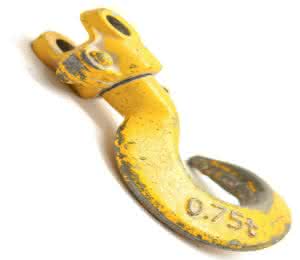
For companies that have to test a large number of hoists, slings or load handling attachments, safety inspections can be a particular challenge. As many companies have neither the necessary test benches nor the appropriate specialists with proven expertise, Heidkamp has trained its own employees to become test and service specialists at its training center. Six service teams are currently on the road throughout Germany with test and service vehicles and offer a complete safety service in companies in all sectors. The Heidkamp test and service vehicles have been equipped with various transportable test rigs and, in addition to tensile and compression tests, also allow the testing of sling chains for freedom from cracks with the so-called flux or load test, which is required at least every three years.
...until the repair
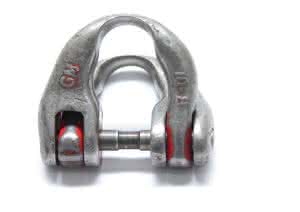
Heidkamp's service staff take care of on-site repairs as quickly as possible, the replacement of test specimens and the necessary documentation of all results and processes in a test report. This is because the comprehensive documentation of all test results is also governed by the regulations. All results must be recorded as part of the ten-year documentation obligation and made available to the authorities on request. In the event of damage, the test reports also serve to provide insurance companies or the employers' liability insurance association with proof of the safe and proper handling of hoists and lifting or load handling equipment.
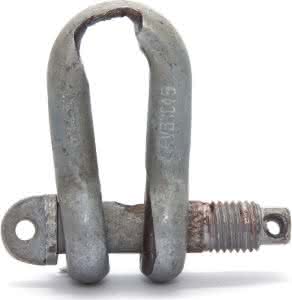
In many places, lifting equipment or slings are only replaced when they can no longer be used. The example photos show the damage that the service teams are confronted with in their daily work. The reasons for damage to defective test specimens are not necessarily overloading or improper use, as even proper use can lead to high wear and tear in the long term. If damaged or worn load handling attachments or hoists continue to be used, the in-house transportation of heavy goods is a gamble with the safety of the workforce. Regular inspections help to prevent accidents and make in-house transportation safe. And so the author is not the only one to ask: "When have the slings and lifting gear in your company been inspected in accordance with the applicable accident prevention regulations?"
Michael Siener


You might also be interested in
"Logistics is a competitive factor for us"
With the move to the new "Campus Criesbach" site, the system manufacturer Bürkert Fluid Control Systems has significantly increased the level of automation. In the new building, planned and implemented by SITLog as general contractor for the...
 read more...
More transparency for production logistics
In order to supply production with the right amount of material at all times, Schmidt Technology needs full transparency of the stocks in the FIFO racks. The company found the answer to this in the simple retrofit solution...
read more...Digital oil lubricates the operational gearbox
Contract and procurement logistics is a particularly labor-intensive area in the portfolio of large logistics service providers. This also applies to Schenker Deutschland AG. This makes it all the more important to optimize the personnel and...
read more...Flexible pooling at fair conditions
In a joint statement, pallet pooling service provider PAKi and logistics service provider Dachser have given their thoughts on the practice of exchanging pallets in an open pool, which is being discussed in the market. Materialfluss documents the...
read more...Commitment to safety and environmental protection
Night after night, employees at the central warehouse of Palibex, Spain's first express distribution network for palletized goods, coordinate the dispatch of 2,500 pallets in Madrid. To accomplish this task in a safe and emission-free working...
read more...Material Flow Round Table: IFOY, hurray! This is what winners look like
On the evening of May 9, the industry celebrated the winners of the IFOY Awards 2017. The following morning, Materialfluss hosted the winners' round table. Curtain up for a conversation about products, innovations and industry visions. Oliver...
read more...Service makes the difference
Exceptional service is much more than a corporate trademark for Hamburg-based Still GmbH. It is an important differentiating factor with which Still has established itself as one of the leading providers of customized...
read more...All-rounder: double girder bridge crane with slewing trolleys
It weighs around 53 tons and is yellow. It can carry loads of up to 16 tons and has a span of 40 meters. On February 13, the overhead crane was delivered from Remscheid to the customer in Dormagen. The crane was designed and manufactured...
read more...Comprehensive range of tasks safely under control
Whether bridge and gantry cranes serving the entire hall or slewing jib cranes for workstations in assembly and production, whether loads weighing many tons or just kilograms - cranes prove to be versatile transport and handling equipment...
read more...