

Short interviews
Green Logistics - Shaping all industries
It remains an exciting topic: green logistics has been an established term for years, but as a comprehensive solution in intralogistics it is still a goal. In eight short interviews, you can read about the approaches companies are using to turn the traffic light green.
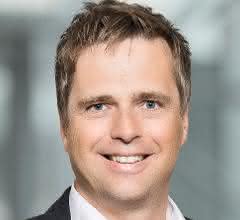
Short interview: Achim Aberle, Head of Technology and Development Aberle GmbH
materialfluss : Does "green logistics" need to be redefined or defined more clearly in 2018?
Achim Aberle: "Green logistics" is actually not clearly defined, but it is shaping the requirements and tender catalog for projects in all sectors - for example with key figures on energy efficiency and CO2 balance. It is clear that "green logistics", which covers a wide range of measures in investment projects, initially causes higher costs. Although they are then amortized relatively quickly during operation, these additional costs are often shied away from. In principle, however, it should be noted that modern components and plant technology are already designed for extensive resource efficiency and low energy consumption as standard. For Aberle, in short, the following applies in all areas: more or at least the same performance with significantly more intelligent and efficient use of resources and reduced energy consumption.
mfl: Your current product for sustainable, green logistics?
Aberle: As a system integrator and general contractor, Aberle always bases its system design in automation technology on state-of-the-art components and the latest technology. In addition to performance and resource efficiency, for example through route-optimized processes and modern control units, this applies in particular to the holistic energy management of plant and building technology. With the Process Management System for Energy (PMS-E), Aberle's product portfolio for Warehouse Management and
material flow system, Aberle has been offering a special software module for end-to-end resource efficiency and low energy consumption in intralogistics for almost ten years. It takes into account a wide range of dependencies, influencing factors and potential savings - and combines them into a consumption-optimized operation with continuous controlling. With the PMS-E, savings of up to 40 percent can be achieved in energy consumption alone. The demand for this retrofittable software tool in general contractor and retrofit projects is correspondingly high.
Short interview: Christian Agasse, CEO PAKi Logistics GmbH

materialfluss : Does "green logistics" need to be redefined or even more sharply defined in 2018, or are the principles that we are striving for still valid?
Christian Agasse: The principles of green logistics are still valid. We believe that in 2018, the growing concern about the shortage of truck drivers and wooden pallets should be used to win over the managers of SMEs in the logistics sector who are still skeptical. Intelligent and professional pooling of load carriers continues to make a major contribution to green logistics and sustainability. At the same time, we use reusable pallets and containers, reduce the transportation of empties enormously (less CO2 emissions) and improve working conditions during handling and storage. Companies that promote the use of pallet pools are implicitly guided by the "three-pillar model" (Hansmann 2006, 167) of sustainability: economic, ecological and social. These companies will find that by working with pooling specialists such as PAKi GmbH, they not only save money while acting according to the principles of green logistics, but also take the social aspect into account.
mfl: Which product from your portfolio will bring customers the greatest improvement to their logistics in terms of sustainable, green logistics?
Agasse: This year, we launched two new IT applications to make the exchange of Euro pallets more efficient: the PAKi e-Voucher to replace the administrative effort of the original paper pallet bills (O bill) in a simple way and the "Driver Drop-off APP" to support drivers in a train-to-train pallet exchange.
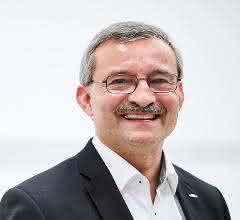
Short interview: Jürgen Wrusch, trade press spokesman for Still
materialfluss : In 2018, does "green logistics" need to be redefined or even more sharply defined, or are the principles that we are striving for still valid?
Jürgen Wrusch: Yes, from Still's point of view, as a manufacturer of industrial trucks we also have a responsibility to contribute to a stable climate in the long term. In this respect, the topic of "green logistics" is an ongoing issue for us. We also regularly receive inquiries from customers who want to include the ecological aspects of an intralogistics solution. Energy efficiency is an important aspect of this. We can offer our customers solutions at various levels. Early and appropriate consultation is ideal. Ideally in the planning phase of logistics projects, but also for existing intralogistics infrastructure. We visit warehouse and production areas on site, speak directly with employees and take a close look at all relevant processes.
mfl: Which product from your portfolio brings the greatest improvement to the customer's logistics in terms of sustainable, green logistics?
Wrusch: The biggest improvement in terms of sustainable, green logistics has been brought about by the Still tugger train in the supply and disposal of production lines. Here, there are effects for better energy efficiency not only at vehicle level, but also at process level, for example when switching to lean production. Tugger train solutions from Still set efficiency standards in lean production supply. Up to 92 percent energy can be saved compared to the equivalent handling performance with forklift trucks. This is the result of the optimum interaction between electric tugger trains and our LiftRunner system. The patented transport and removal system for trolleys (load carriers) of all kinds scores with the lowest rolling resistance in the industry. Conclusion: The operator not only reduces costly logistics space in production with tugger trains, but can also reduce his stocks and energy consumption and thus produce in a more environmentally friendly way in terms of "green logistics".
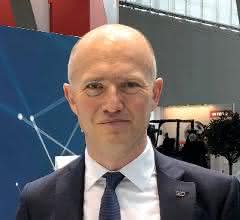
Short interview: Adriano Chinello, Global R&D and Marketing Director Mechatronic Drives & Solutions, Bonfiglioli
materialfluss : In 2018, does "green logistics" need to be redefined or even more sharply defined, or are the principles that you are striving for still valid?
Adriano Chinello: Green logistics is becoming increasingly important with the development of efficient and affordable motor technologies, motor control and digital system integration. Energy and cost savings and environmental sustainability really do go together these days. We already have the ability to comply with international and European standards such as IEC 61800-9-2 and EN 50598 to measure and evaluate the efficiency of a power drive system. But that's only part of the story, because these standards only relate to the combination of motor and inverter, the rest of the drive train is not yet considered. The next step is to go into the specific structure of the machine, adding the mechanical power transmission and other controlled devices to take into account the actual operating cycle of the machines, including the speed/torque time profile. At this level, we often find additional room for energy optimization in close cooperation with machine builders. If we add the exchange of further information related to the energy behavior of the entire motor-driven unit, local factory information systems as well as cloud energy management systems can bring further benefits to the user.
systems can bring further benefits to the user.
mfl: Which product brings the greatest improvement to the customer in terms of green logistics?
Chinello: Our BSR synchronous reluctance motor technology was specially developed to bring energy efficiency to an extremely high level. The combination of BSR with the Active Cube series and its integrated vector control as well as the selectable communication interfaces enables new solutions. This creates new benefits, such as increasing efficiency from IE2 to the IE4 super-premium efficiency class without any significant impact on the machine design. This brings economic benefits to machine manufacturers and end users in the form of reduced electricity costs and new markets for better machines.
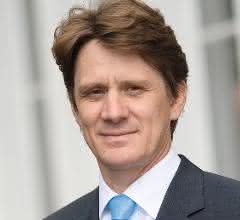
Brief interview: Christian Beer, owner and managing director of Servus Intralogistics GmbH
materialfluss : Does "green logistics" need to be redefined or even more sharply defined in 2018, or are the principles that you want to strive for here still valid?
Christian Beer: Everyone should decide for themselves how valid this topic is. We are aware that we owe it to future generations to use the available resources conscientiously. Acting sustainably is the order of the day for us. That is why we take care to be pioneers in terms of energy efficiency and durability right from the development stage of our products. For example, the intelligent and autonomous transport robots were equipped with ERS (energy recovery system, known from Formula 1). This means that they initially need energy to accelerate, but when driving they only need energy to maintain speed, while they feed energy back into the battery when driving downhill and braking. In addition, an ideal ratio of dead weight to payload - usually 1 to 1 - contributes to high energy efficiency. With the energy costs of a fully fueled car, our ARCs (Autonomous Robotic Carrier) can drive around the world up to three times. Energy efficiency is one thing, but the CO2 footprint is another. Servus systems are therefore also characterized by extremely material-friendly operation. The autonomous transport robots, which connect warehouse and production without interfaces and deliver the goods just-in-time to the right place, are equipped with ABS and
to the right place, are equipped with ABS and ASR (anti-slip regulation). With the Smartloader, in which two extendable pairs of belts pick up the transported goods, Servus
also has the most material-friendly load handling device
on the market.
mfl: Which product from your portfolio will bring the greatest improvement to the customer's logistics in terms of sustainable, green logistics?
Beer: "It's not a question of the product, but of the concept. The ideal material flow and the linking of the entire value chain has the greatest effect on green logistics. We therefore work with our customers to develop tailored solutions that enable the flow process and avoid stop-and-go. This means that all vehicles have to brake, stop and accelerate again. When developing concepts, we therefore consistently focus on the flow process. This once again promotes the conservation of resources and energy efficiency."
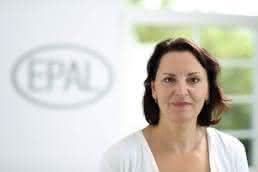
Short interview: Andrea Engels, General Manager Public Relations & Marketing, EPAL
materialfluss : Does "green logistics" need to be redefined or even more sharply defined in 2018, or are the principles we are aiming for still valid?
Andrea Engels: Load carriers are an important part of ecology-oriented logistics. I am convinced that EPAL's work has also increased awareness of the environmental relevance of the EPAL Euro pallet, both in Germany and worldwide. And since the transportation of goods is always global, the ecological synergies of the globally functioning EPAL system can be used worldwide. Germany is currently lagging behind in terms of compliance with the Paris Climate Agreement. Other countries, such as the UK and China, are working more intensively to meet climate protection targets. Sustainability has become an important economic factor in China and this also includes sustainable load carriers such as the independently quality-tested EPAL pallets, whose growth rate in production and repair in China was +45% in the first half of 2018. In my opinion, we don't need more clearly defined principles when it comes to green logistics, but rather a stronger will from everyone involved in the supply chain so that CO2 savings are not just borne by individuals. We are seeing great efforts in various sectors, such as the chemical industry, which also places great importance on sustainability in logistics and to which we can offer the new reusable EPAL CP pallets.
mfl: Which product from your portfolio brings the greatest improvement to the customer in terms of sustainable ,
green logistics?
Engels: All EPAL load carriers basically stand for the proven cycle of the EPAL system from production, through use and repair to thermal recycling at the end of the life cycle. The use of reusable load carriers conserves resources and budgets. Ecology must also be affordable or, even better, bring financial benefits. EPAL pallets can also score points here, as they are made from the renewable raw material wood, are safe and durable thanks to independent quality testing and can be repaired at low cost.
Short interview:Dirk Haarscheidt, Sales Systems Division, Stöcklin Logistik
materialfluss : Does "green logistics" need to be redefined or even more sharply defined in 2018, or are the principles that you are aiming for still valid?
Dirk Haarscheidt: Green logistics continues to be very important in the manual sector and for companies that generally pay attention to their carbon footprint. In the field of automated material flow technology, technical optimizations have been achieved in recent years (successes: lower consumption, use of energy generated;
Measures: Redesign, extensions, driving strategies). Higher energy savings can be achieved in the pallet area in particular, as more energy is also required there. Further optimization potential still exists in the efficient use of data (statistics,
analysis, proactive systems).
mfl: Which product from your portfolio brings the greatest improvement to the customer in terms of sustainable, green logistics?
Haarscheidt: In terms of optimizing data usage, StöcklinDMA, the latest member of the Stöcklin Software Suite product family, should be mentioned here. It marks an important milestone on the way to functional (and sustainable) Logistics 4.0. This software tool can be used to identify at-risk system components and fault-prone processes at an early stage and automatically report them to the responsible control authorities. This gives users the opportunity to initiate ad hoc countermeasures in the form of predictive maintenance long before damage and sometimes prolonged, expensive downtimes occur. This means that energy consumption can also be optimized with the help of efficient data usage.
Short interview: Rudolf Muhlfinger, Business Development, SSI Schäfer
materialfluss : Does "green logistics" need to be redefined or defined even more sharply in 2018?
Rudolf Muhlfinger: For many companies, sustainability is a central element of their corporate philosophy. Against this backdrop, green logistics is increasingly becoming the focus of plant operators. In terms of the total cost of ownership, the topic already plays a key role in the planning of intralogistics equipment. Sustainability aspects for the most climate-neutral operation possible also determine the design of a logistics property.
mfl: Which product brings the greatest improvement to the customer?
Muhlfinger: One specific example of sustainable product development is our Exyz storage and retrieval machine for the fully automated storage of pallets. The name "Exyz" is actually an exact description of everything that the storage machine offers. The "E" stands for efficiency in terms of energy consumption and performance - and this applies to all three dimensional axes "X", "Y" and "Z" on which storage and retrieval machines operate. Particularly noteworthy is the mast concept, which gives us a unique selling point. This allows counterweights for the pallet truck to be integrated into the mast, which compensate for up to two thirds of the pallet truck's own weight and thus increase performance while reducing energy consumption. This enables us to achieve energy savings of up to 20 percent during lifting alone. In addition, efficient energy recovery systems are already standard on the Exyz.


You might also be interested in
Circular load carriers for more sustainable supply chains
With the planned Industrial Accelerator Act, the European Union wants to accelerate the transformation of industry towards low-carbon production processes and resource-efficient supply chains. Logistics and transportation are also increasingly...
 read more...
Integration of a robotics solution
Lyreco modernizes logistics center in France
Lyreco is pressing ahead with the automation of its central site in Villaines-la-Juhel with an investment volume of over 25 million euros.
read more...Dragsbæk halves pallet area
By using automated pallet solutions from Palomat, Dragsbæk has halved the space required for pallets, optimized processes and sustainably improved working conditions.
read more...Pixels instead of paper
With the solutions from Logistikbude, Bekuplast, manufacturer of plastic containers, keeps an eye on its load carriers, saves costs and can work more efficiently with forwarding partners.
read more...Flexibility in saving space
Purus Plastics has developed a new retail range. The company operates a processing plant for plastics; recycling creates new products from secondary raw materials, including pallets.
read more...Solutions for the food industry
At Werit, the focus is on customer-specific solutions, sustainable recycling and pooling systems and products made from recyclate. The stand concept is divided into four areas: Products and innovations in the food sector, customer solutions,...
read more...Pallets with QR code
At the Epal Germany stand, visitors can gain an insight into the reusable system propagated by Epal, the life cycle of an Epal pallet and the newly developed QR pallet.
read more...The path of the Euro pallet into the IoT
With the introduction of the EPAL Euro Pallet QR in 2024, the European Pallet Association (EPAL) aims to set a new standard for the classic Euro pallet, which has been used successfully for over 60 years, and pave the way for ecologically...
read more...Retail range: flexibility to save space
Purus Plastics has developed a new retail range that is designed to attract the interest of retailers in particular. The company operates a modern plastics processing plant in Arzberg, Bavaria; new products are created from secondary raw materials...
read more...