

Opinions on Germany's political future
Result of the reader survey on the break-up of the traffic light coalition
Last week, we conducted a survey among our readers on the dissolution of the traffic light coalition and a possible reorientation of German politics. The results indicate a clear preference for new elections and reveal a mixture of optimism and concern about the economic and political future. In detail, a broad spectrum of opinions emerges.
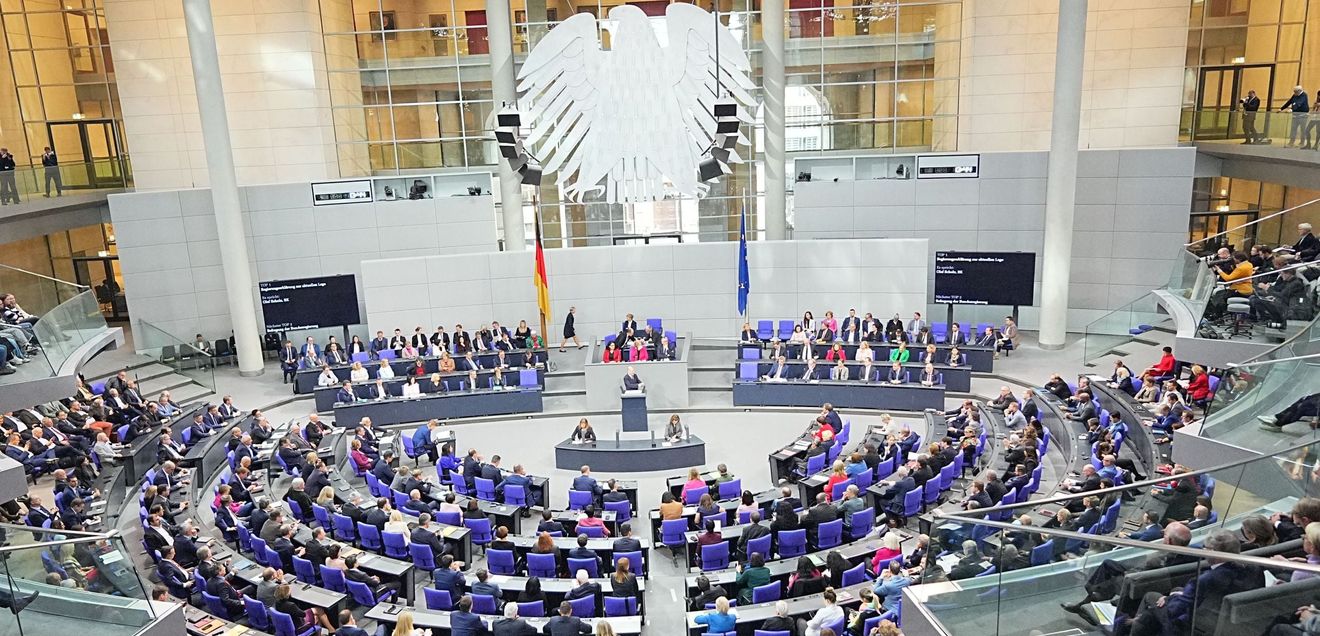
The end of the coalition is welcomed
At 91.9%, almost all respondents were in favor of the end of the traffic light coalition and the path to new elections. Only 8.1% would have been in favor of a continuation until the regular federal election in 2025. This clear majority underlines the widespread conviction that a change is necessary to break political deadlocks and create the basis for a new course.
Positive expectations for economic development
The economic assessment of those surveyed after the failure of the traffic light coalition is interesting. The survey results show a surprisingly optimistic attitude towards the economic future: 68.6% of respondents believe that the failure of the coalition could even open up opportunities and enable an improvement in the economic situation. Although 17.4% predict a moderate deterioration, they believe that the situation will stabilize. In contrast, only 4.7% fear a significant economic deterioration and expect serious consequences for their companies.
The results show that the majority of respondents hope for new impetus for the economy, particularly through possible changes in political direction.
Opportunities and risks of early elections
The majority of respondents see the premature dissolution of the government as an opportunity to improve the political and economic situation: 45.3% see significant opportunities for positive changes for the economy and new opportunities for companies and 43% expect at least some positive effects, particularly through a stabilizing realignment. Only 3.5% do not expect any significant opportunities, and likewise only 3.5% believe that the risks outweigh the opportunities and that uncertainties could affect business.
The figures show that many respondents see a new election as an opportunity to initiate necessary reforms and improve economic conditions through more stable and business-friendly policies. The data suggests that there is confidence in a fresh political start and hope that political change will open up new avenues.
Influence of the political situation on competitiveness
The results for the question of how the political situation affects the competitiveness of the company show a clear split in the assessment of the situation. A third of respondents (37%) see the political changes as an opportunity that strengthens the competitiveness of their companies. However, a larger proportion of respondents (40.7%) see political uncertainty as a major challenge to competitiveness. This group states that the political situation makes long-term planning and investments more difficult. Around 22.1% state that the political situation has no significant impact on the competitiveness of their company.
Divided confidence in political stability
The survey on confidence in future political stability shows a strongly divided assessment, with only 3.5% of respondents stating that they have "very high" confidence in future political stability and 33.7% stating that they have "fairly high" confidence. This means that just over a third (37.2%) of respondents are confident that political continuity and stability can be ensured despite the new elections.
On the other hand, however, 37.2% of respondents express "rather low" or "very low" confidence. Just over a third are also concerned about the future and question stability.
An equally large group, namely 19.8% of respondents, state that they have a "neutral" attitude towards future political stability - i.e. neither great expectations nor strong concerns. This neutrality could also be an expression of a pragmatic attitude in which respondents consider both positive and negative scenarios to be possible, depending on how the incoming government tackles the challenges. Overall, the figures suggest that there is a fundamental need for a government that makes clear decisions and provides stability.
Debate on the suspension of the debt brake
The question on suspending the debt brake is answered in different ways. 30.6% of respondents support the suspension if the investments flow into sensible and long-term profitable areas such as infrastructure, education and climate protection and 25.9% are in favor under certain conditions and demand clear repayment strategies and sustainable investment plans. This shows that clear and transparent planning is crucial to secure approval. A smaller but significant group of 18.8% even fully support the suspension of the debt brake. Only 22.4% reject the suspension of the debt brake and fear uncontrolled national debt in the long term.
These figures reflect an open-mindedness to increase government spending in a targeted manner, as long as this is economically sensible and future-oriented. However, the rejection of a quarter of respondents shows that a significant proportion of the population sees fiscal stability as the basis for trust in politics.
Priorities for political reforms
When asked about the most urgent political reforms, respondents expressed clear preferences. Tax incentives and business support (27.9%) received the highest level of approval. Companies are calling for relief and incentives that give them scope for investment and growth. Labor market and social reforms (26.7%) are also seen as important. Investments in digitalization and infrastructure (22.1%) ranked third. This shows the need for modern and efficient infrastructure, which is crucial for companies and Germany as a business location.
The significantly lower level of approval for areas such as promoting innovation and climate protection measures shows that respondents prefer measures that can be implemented in the short term, which strengthen competitiveness and bring economic stability.
A call for change
The survey shows broad support for the end of the traffic light coalition and the desire for early elections. Respondents hope that a fresh political start will open up more economic opportunities and create a more stable, business-friendly government. At the same time, there is a clear expectation that politicians will deal with investments in a transparent and responsible manner, particularly in the event of a possible suspension of the debt brake. Tax incentives, labor market reforms and a modern infrastructure are the primary concerns here.


You might also be interested in
Igus training factory to end shortage of skilled workers
Igus is increasingly training junior staff itself. A new training factory at the company headquarters in Cologne-Porz will support this. The company aims to no longer be reliant on external specialists by 2027.
 read more...
IfW, DIW, IWH, RWI and Ifo Institute
Economic researchers lower their growth forecasts further
The leading German economic institutes see hardly any growth impetus for 2025, but instead rising unemployment figures and persistent weaknesses in the location. According to experts, only a stable government with a clear economic policy strategy...
read more...Exports shrink - exports to the USA collapse
The headwind for Germany's exporters on the global markets remains strong. In October, they had to cope with sharp declines - especially in their most important sales market, the USA.
read more...Incoming orders fall more moderately than expected
According to the Federal Statistical Office, German industry recorded a slight decline in orders of 1.5 percent in October, but positive revisions for the previous month and surprisingly strong annual figures are creating optimism.
read more...Companies plan more short-time work and job cuts
The crisis is increasingly hitting the labor market. According to an Ifo survey, an important part of the German economy in particular is increasingly planning to cut jobs, while short-time working is on the rise.
read more...German companies' existential fears on the rise again
According to an Ifo survey, almost one in fourteen companies now sees its existence threatened. This is significantly more than recently - but the figures have already been much higher.
read more...Ifo: Lack of orders rises to highest level since 2009
The German economy is suffering more and more from a lack of orders. A regular survey shows worse figures than during the coronavirus crisis.
read more...Growth forecast of the ifo Institute
German economy stuck in the doldrums
The ifo Institute has lowered its growth forecast for the current year. It now expects zero growth instead of the previous forecast of 0.4%. The institute has also lowered its estimate for the coming year to 0.9 percent instead of 1.5 percent. The...
read more...Merry Christmas and a Happy New Year!
The materialfluss team wishes you a Merry Christmas and a successful and healthy 2026.
read more...