

Interview
From LT-manager 3/18: "Agile optimization is interactive"
Eva Savelsberg, Head of Logistics at software company Inform, has caused a stir with her book "Agile optimization in companies: Managing the unplannable digitally" caused quite a stir. In an interview with LT-manager, the manager and scientist explains the concept and the importance of the approach for Inform.
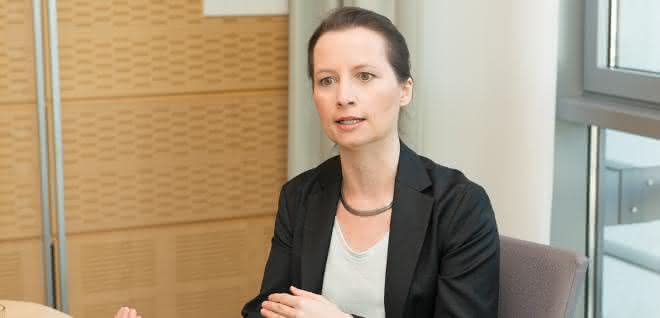
LT-manager : Ms Savelsberg, not all managers may be familiar with the term agile optimization - can you try to define it in three sentences? Eva Savelsberg: Agile optimization is a set of tools that enables managers in particular to make decisions very efficiently in today's very complex, networked and time-critical world. Agile optimization uses software to provide suggestions for action. The manager is not overruled, but can make decisions of a quality that a human being cannot make in the shortest possible time.
LTM: Why? Savelsberg: Because the variables are too numerous and too complex and humans can only have an overview of a certain spectrum. This is where agile optimization offers support.
LTM : Do you have a tangible example? Savelsberg: I deal with container logistics very often. Take 60 containers and 60 straddle carriers: there are more possibilities of which carrier takes which container in which order than there are atoms in the universe. The combinatorics are so comprehensive that humans have no chance and automatically fall back on their experience. I don't want to criticize that, but even experience has its limitations.
LTM : How do you measure experience against results that come from agile optimization? Savelsberg: It is difficult to measure the ballet on a terminal as a whole. But in some areas, such as train loading, you can see that it takes a planner two hours and the software one or two seconds. In addition, the software is forced to adhere to all the given framework conditions and not incorporate any human workarounds. And, as I said, it is faster. The further development of algorithms has brought greater acceleration to processes than the further development of processor technology. If you think about where computers alone were in the 1990s, you can see the power of this topic. A problem that required 100 years of computing time back then can now be calculated in two seconds. With all the respect I have for humans: He won't be able to keep up. Humans have other abilities. Agile optimization is interactive, it needs people's experience. We are not creating a human-free world.
LTM: Forgive me for asking, but isn't software as we know it already capable of agile optimization? Savelsberg: It's best to think of it in stages. ERP systems have collected data and made it accessible. Agile optimization then provides recommendations for action or optimized decisions are made automatically. Business intelligence can then be used to evaluate how efficiently processes are carried out with or without optimization, for example. Managers no longer have to interpret the data themselves, as was previously the case at a warehouse control center, for example. The principle is not new, but many problems can only be calculated in an acceptable amount of time today.
LTM : And this is how artificial intelligence is finding its way into management? Savelsberg: It has already done so in everyday life; using a navigation system is no different. It will also find its way into management. The names, the hype words, which also include AI, are constructs that designate certain developments.
LTM: How can you get the managing director of a medium-sized family business excited about incorporating AI into his decisions? Savelsberg: I don't think the managing director you're describing cares about the name at first. If, on the other hand, it becomes clear to him what the added value is, how much transparency and relief he gets and how much better he can support decisions and thus achieve significantly better resource utilization, then his enthusiasm begins. Agile optimization also means that a part must always be tailored to the customer. It's not something you send in a package and then simply install (laughs). We also need to understand the customer's business process before we can optimize the software.
LTM : Can the new findings from agile optimization also inspire entrepreneurs? Savelsberg: Exactly - using the findings to find new products or redesign existing ones can certainly encourage enthusiasm for agile optimization.
LTM: In which areas of logistics or transportation can the concept be implemented particularly well? Savelsberg: Inform is very broadly positioned, we have various business areas that deal with airports, container terminals, truck scheduling, materials management, production and other areas. The areas of application cannot be limited to one transport route. The area of application is generally where complexity causes managers to break out in a sweat. Especially in logistics, agile optimization is a good tool in almost all areas.
LTM: So you offer agile optimization in all business areas? Savelsberg: Yes. Inform has its own research and development department and, of course, there are business units that are more advanced. But then it's more of a pilot function and the other divisions then use the findings. For us, it's more about the type of problem and not the transport route.
LTM : Are we talking about an evolution or a revolution when it comes to agile optimization or AI? Savelsberg: Good question. I think within Inform, a company that has been involved in optimization for 50 years and AI for 20 years, it is an evolution. However, the steps we take with our customers can certainly mean a small revolution. Switching from a small amount of software to a machine learning solution, for example, is a huge leap, without wanting to sound scary.
LTM: But self-controlling systems are still a utopia? Savelsberg: Yes and no. Decades ago, people were already discussing the deserted factory that never came. There are also fears of this happening with container terminals today. I do believe that support from software will increase, but that humans will never become obsolete. Humans have skills that machines will never be able to replicate, or at least you and I will never see that again. It will be more in the direction of coexistence, but there is still a lot of research to be done. The role of humans in processes will remain and it will not just be purely data-driven processes that dominate.
LTM : Is logistics more open to the topic compared to other sectors? Savelsberg: The sectors are generally very different, the worlds of a container terminal operator and a cement producer are far apart. But they are all open-minded when it comes to saving time and money.
LTM : So there are no greater or lesser reservations in logistics than in other sectors? Savelsberg: No, logistics is also very broadly based. There are areas that are more software-savvy than others, but in our experience, the idea of optimization has become quite catchy for everyone.
LTM : To what extent is the good economic situation in the industry currently making your work easier? Savelsberg: You can definitely feel that there are significantly more inquiries coming in and more contracts being signed. This gives our company room to invest more. But the situation is never just relaxed, because you need employees for this growth. And you have to recruit them first. However, our customers also need to scale up their resources in other ways. Agile optimization also has the advantage that I can use it to process more processes or orders without having to invest in infrastructure straight away. This makes me flexible and software can be easily scaled down. You don't invest in goods that then just stand around. A container gantry crane costs four or five million euros, you can get some software solutions for that, if I may say so casually. But the software may then save the purchase of this container gantry crane.
LTM : Will agile optimization be one of the big topics for Inform? Savelsberg: Agile optimization is an enrichment of the optimization that we have been doing for many decades. It is a strong topic for us, but our DNA is optimization, we come from operations research and have always developed these approaches.
LTM : How big should I imagine the logistics division at Inform to be? Savelsberg: Inform currently has around 600 employees and most of them ultimately work in logistics under various names such as Aviation or SCM. However, we also have an area that deals with fraud detection, which in itself has nothing to do with logistics, even though the principles of agile optimization work in the same way here. But the rest is indeed logistics. Even our workforce management area is indirectly about nothing other than logistics processes.
LTM : How do you go about recruiting new employees? Savelsberg: Inform has chosen a very sustainable approach, we are increasingly training people and are working with Aachen University of Applied Sciences to offer a dual degree course in Mathematical-Technical Software Engineering (MATSE). After three years, the graduates also have project experience at Inform, which is ideal. Inform offers a lot for its employees and we are therefore pleased to have a very low fluctuation rate of just three percent.
LTM : Is Aachen a good location for attracting employees? Savelsberg: Aachen is attractive for those who know it. The university is very good, the city is a good size and yet the distances are short.
LTM : Do politicians support companies sufficiently when it comes to education and training? As a lecturer, you know both sides... Savelsberg: Of course, you can always wish for more investment in this area. MATSE training is great, but it's not yet available in schools. We could imagine more interaction here to get even more children interested in STEM subjects. There is still potential there.
LTM : You studied mechanical engineering and also habilitated there, what led you away from teaching? Savelsberg: Mechanical engineering is in itself a very application-oriented course of study and I also worked in an application-oriented way during my doctoral thesis and later during my habilitation and headed a department at the RWTH that dealt with large research projects in logistics. Working with companies has always shaped my everyday life. Of course, I also did some teaching back then, but I still do that today. Software, mechanical engineering and logistics - my life has revolved around this triangle.
LTM: And then came Inform... Savelsberg: Exactly. At the time, I was in charge of an MBA program for managers and invited Inform to give lectures. That's how I got to know the company and, as a mechanical engineer, I always knew that I didn't want to stay in academia forever...
LTM: Why? Savelsberg: To get to know the diversity of life. There was a great need to get to know the other side. At that time, the time had come to switch from university to Inform. But even a manager in a company has to keep thinking outside the box. As I am still teaching at the RWTH, this field remains open to me.
LTM: And you write books like this one in your spare time? Savelsberg: Yes (laughs). But that's also the case in science from time to time, that texts are written in my free time.
LTM: Last but not least: Which of your everyday tasks could you use AI to help you with? Savelsberg: I'm looking forward to many things that AI will bring. These are small things such as a chatbot that uses voice recognition to retrieve data from a system. We all spend a lot of time in the car and I like the prospect of not always having to nag employees on the road when we want to know something, but instead using a chatbot.
The interview took place at the company's headquarters in Aachen. Author Martin Schrüfer was able to resist the temptation to cross the Belgian border after the interview and make his way home with a generous portion of chocolates - much to the chagrin of his colleagues. However, he once again used the artificial intelligence of a navigation system to the full on this trip to find his way to the interview and then home again.
VITA
Dr.-Ing. Eva Savelsberg is a member of the management team at Inform in Aachen. As head of the Logistics division, she is responsible for software systems that optimize logistics processes in real time with the help of intelligent algorithms. She is a lecturer at RWTH Aachen University, where she also completed her doctorate and habilitation in mechanical engineering. She has published four books and more than 30 publications on innovations in transportation logistics.
ABOUT THE BOOK
Complexity, networking, acceleration and disruption characterize the modern business world. The result: "fires" are extinguished, processes are optimized on a small scale and corporate goals are lost sight of. In this book, the authors present the management strategy of agile optimization. It enables entrepreneurs to better deal with increases in complexity, disruptions and unplannable events in day-to-day business - and to prevent negative effects.
This is based on the digitalization of operational management decisions to increase productivity and corporate resilience. Existing, previously unrecognized scope for decision-making is expanded with the help of computer intelligence and managers receive situation-optimized recommendations for action. Because man and machine know more than man alone. In addition to the expertise of experts from the fields of agility and optimization, 14 entrepreneurs provide an insight into why they have opted for agile optimization. The book reveals the strength behind the interactive interplay between man and machine.
"Agile optimization in companies: Das Unplanbare digital managen" was published by Haufe Verlag on April 12 as a paperback and as an eBook and costs 29.95 euros (book). ISBN: 978-3648111352


You might also be interested in
Cooperation for last-mile baggage automation
Vanderlande and airport operator Avinor have entered into an innovation partnership to explore ways to fully automate the last mile of the baggage handling process.
 read more...
Röhlig Logistics expands its global network
Röhlig Logistics has expanded its local presence in Belgium with the opening of a new office at Liège Airport on January 1, 2023.
read more...Interroll opens new plant in Suzhou
After two decades on the Chinese material handling market, Interroll has opened a new plant in Suzhou. The aim is to double production capacity in the Asia-Pacific region and in China.
read more...Hörmann Industries bundles intralogistics and brings in ex-Swisslog boss Christian Baur
Hörmann Industries GmbH has established a new business division. "Intralogistics" unites the companies Hörmann Logistik with its subsidiary Hörmann Logistik Polska, Klatt Fördertechnik and Hörmann Logistik Systeme under one roof.
read more...Interview with Christoph Beumer
"Sustainability is not annoying, but a real asset"
Dr. Christoph Beumer, CEO and owner of the system integrator Beumer Group, is one of the most profound experts in the German intralogistics industry.
read more...Security and performance at the latest level
New electric tow tractors and platform trucks from Linde Material Handling
New powerful electric tow tractors and platform trucks from Linde Material Handling are now flexing their muscles.
read more...50 years of Vanderlande in Germany
The Vanderlande branch in Mönchengladbach celebrates its 50th anniversary as the first and therefore oldest German location of the globally active Dutch group.
read more...Bodo Schlenker new Divisional Director Software Solutions at Beumer
Bodo Schlenker has been Divisional Director Software Solutions at the Beumer Group since April 2021. The computer science graduate can draw on many years of experience.
read more...Fraunhofer IML and KION Group further develop LoadRunner
In a joint Enterprise Lab, the partners want to further develop and industrialize the autonomous vehicle swarm equipped with distributed artificial intelligence.
read more...